

Accelerate progress on value chain GHG emissions
Explore how Shell’s book and claim solutions can support your decarbonisation strategy
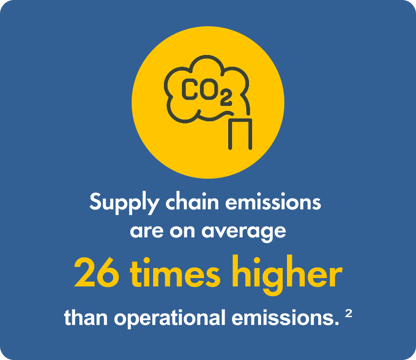

Shell’s book and claim solutions can help you:

Verify that low carbon fuels have been introduced into the fuelling network, establishing the lifecycle GHG emissions data associated with the fuel’s use

Enable verified lifecycle GHG emissions reduction data to be transparently shared with value chain participants, even if they do not directly use the fuel (i.e. freight forwarders, shippers and cargo owners)

Reduce the risk of erroneous double-counting by using a blockchain-based registry to provide a secure, nonpublic, unalterable record of lifecycle GHG emissions reduction data

Build trust and credibility through third-party verified lifecycle GHG emissions reduction data, calculation methodologies and processes, leveraging the Smart Freight Centre Market-Based Measures Framework for carbon accounting
How it works
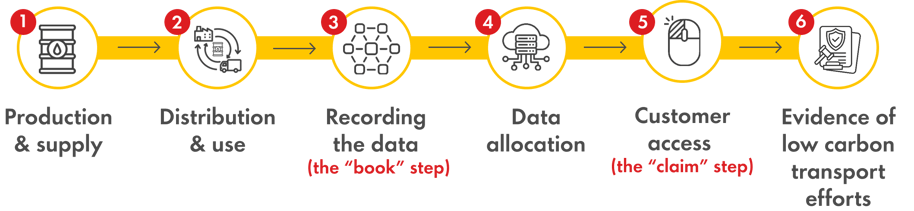
1: Production & supply
Low carbon fuel (e.g., SAF, marine biofuel, bio-LNG, renewable diesel) is produced or procured and enters the fuel supply
2: Distribution & use
Low carbon fuel is delivered and used within the existing supply chain
3: Recording the data
(the “book” step)
Verified environmental attribute information (lifecycle GHG emission data) is recorded (“booked”) in a secure digital registry
4: Data allocation
Using the registry, the environmental attribute information (lifecycle GHG emission data) is allocated to participants across the value chain
5: Customer access
(the “claim” step)
Participants in the value chain access (“claim”) the environmental attribute information (lifecycle GHG emission data) allocated to them from the digital registry
6: Evidence of low carbon transport efforts
Customers may use2 the information to support company goals, such as low carbon transport strategy planning and voluntary ESG disclosures in response to growing stakeholder expectations
2 As emissions reporting requirements differ per business, company and jurisdiction it is the sole responsibility of the company participating in our offers to assess the applicability of such information and to ensure full compliance with all relevant laws, regulations and reporting frameworks